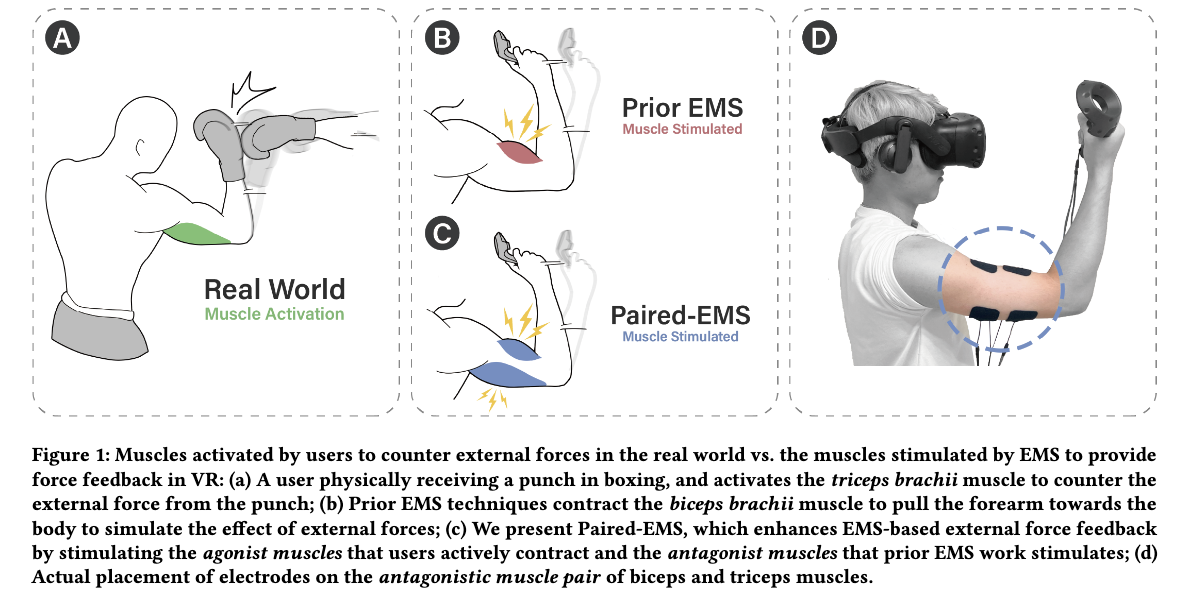
Prior EMS systems stimulate only the antagonist muscle to simulate external force — but the body actually uses both muscles in a pair simultaneously. This mismatch makes the haptic sensation feel artificial and unconvincing.
One-Directional Force
Stimulates only the antagonist. Sensation doesn't match real-world force perception — feels unnatural and disconnected.
Bidirectional Tension
Stimulates both agonist + antagonist at once. Creates genuine internal tension that mimics real physical contact.
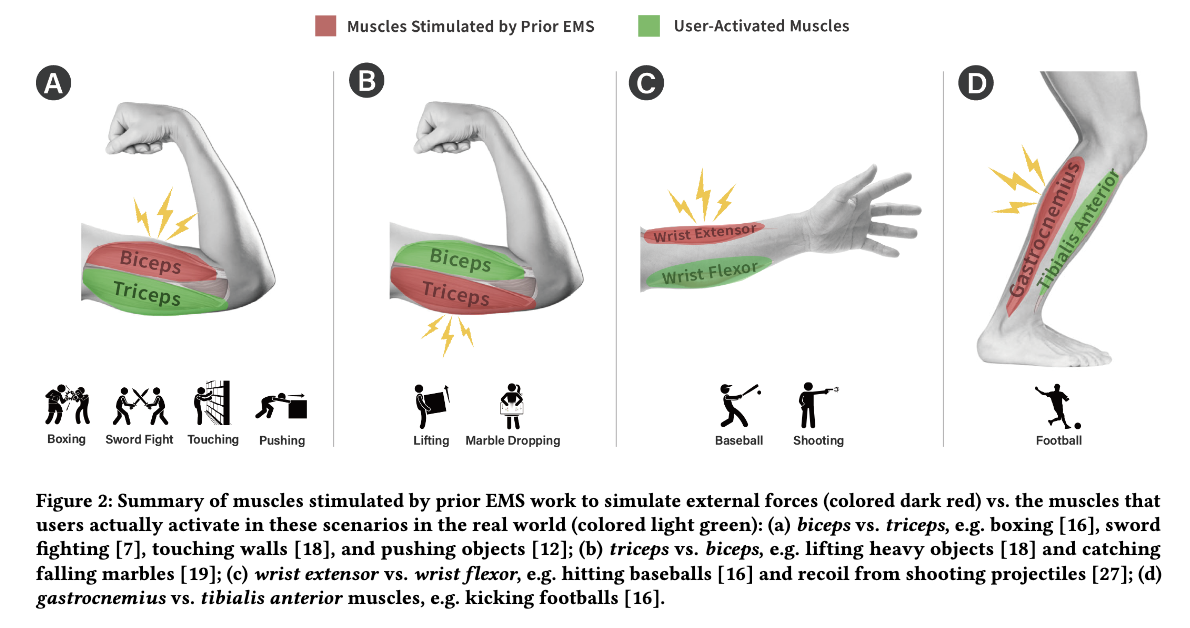
// KEY INSIGHT
In almost every real-world force scenario, users activate the exact muscles that prior EMS ignores. Paired-EMS closes this gap by stimulating both sides of the pair — matching what the body naturally expects.
The study used a combination of EMS electrodes and tactile feedback devices to evaluate how paired stimulation compares to baseline single-muscle EMS across blocking and punching tasks.
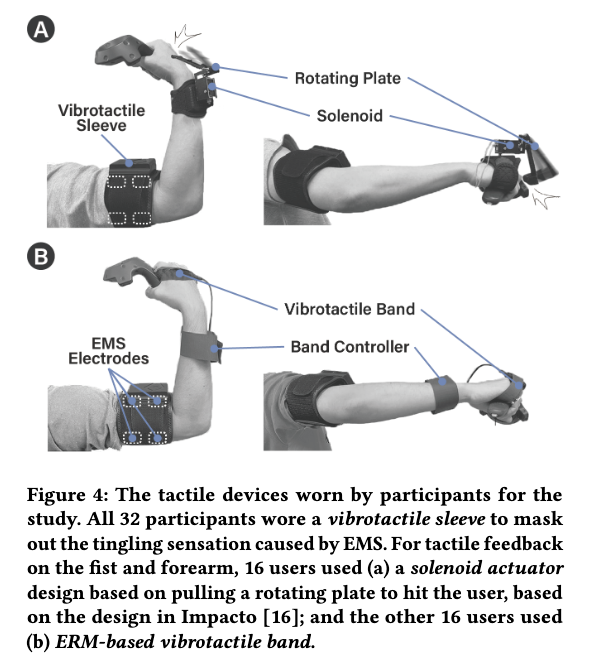
Electrodes on both muscles of the antagonistic pair. Synchronized pulses fire on both channels simultaneously under controlled parameters.
Rotating plate design delivers physical impact feedback to the fist/forearm — used by 16 of 32 participants.
ERM actuators in a wrist band provide vibration-based tactile feedback — alternative condition tested on the other 16 participants.
Worn by all 32 participants to mask the tingling sensation of EMS — ensuring unbiased haptic evaluation.
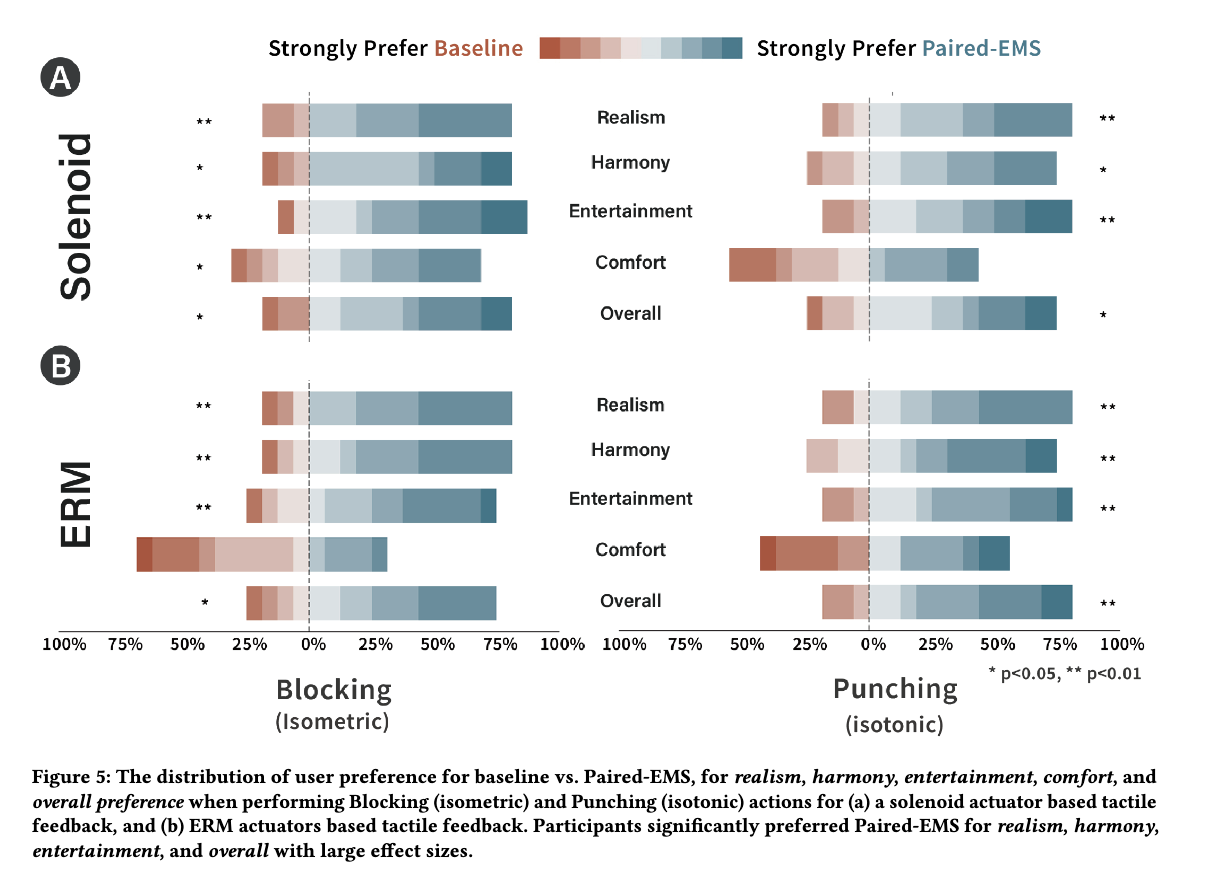
A 32-participant user study evaluated Paired-EMS against the single-muscle baseline across Blocking (isometric) and Punching (isotonic) tasks — measuring realism, harmony, entertainment, comfort, and overall preference.